Drywall Repair in Pearsall, TX
Settling cracks, mismatched texture, ceiling stains from an AC drain or a roof, and holes from doorknobs and movers, repaired and blended back into the surface so the fix doesn't stand out once the room is painted.
Once you have described the damage, a drywall pro serving Frio County rings back with a figure, and nothing goes ahead without your yes.
Call 7 days, 7am–9pm
Find your wall among these cases
Pearsall was platted beside a railroad well in February 1882, and the houses raised around that first townsite in the decades after show their wear in a few recurring ways. Each entry below pairs the damage with the work a careful repair calls for, so you have the words ready when you get in touch.
- Diagonal crack off a door's upper corner
- A shifting frame pushes its strain into the corners of every opening, which is why the line starts at the casing and heads off on a slant. A careful job widens it a little, beds tape over it in setting-type mud, spreads each successive coat wider and finishes with texture to suit the wall.
- Brown ring near the hallway return
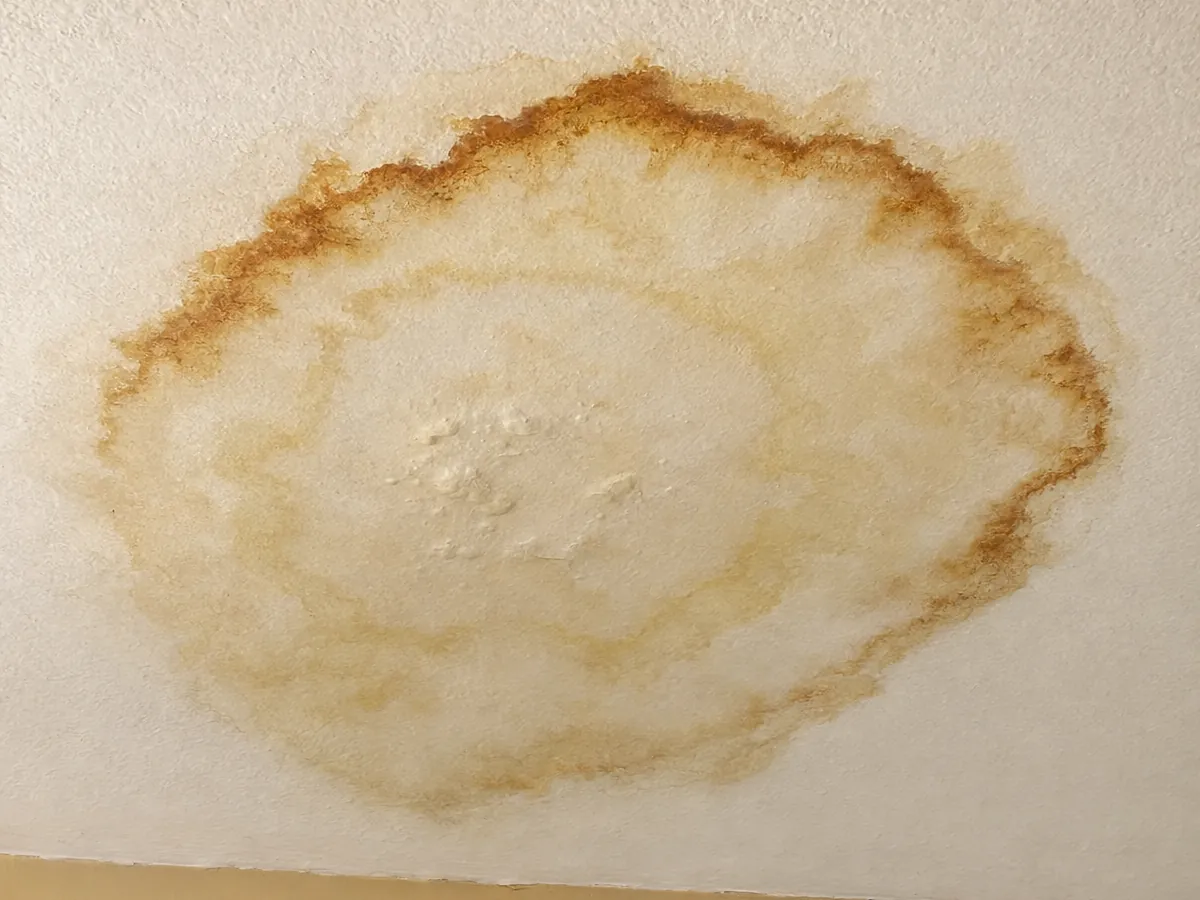
- Condensate from the cooling coil is meant to leave through a drain line; when algae plugs it or the backup pan rusts through, water lands on the top face of the ceiling board. After the drain is cleared and readings come back dry, firm board keeps its place and the ring is locked in with a solvent-based stain primer; spongy board is taken out.
- Doorknob punch-through on a bedroom wall
- A round hole from a door handle gets wood or metal backing set behind it, or a squared-off opening fitted with fresh gypsum, followed by tape, coats of mud, texture and primer. A door stop added afterward spares the wall a repeat.
- Outside corner split in a hallway
- The metal angle under the compound, called corner bead, bends when a dresser or a hand truck catches it, and the mud cracks away. The bent stretch is trimmed out, fresh bead nailed or crimped on, and the edge built back square in several light passes.
Walk through a repair day in order
Small and mid-sized jobs move through the same stages between your first call and a surface ready for the painter. Knowing them early lets you clear the room and ask sharper questions about the price.
- Begin by phone or picture. Call, or text us a shot of the damage; we go over what it shows, and a Frio County drywall pro follows with questions of their own and a price. Nothing gets scheduled before you have agreed to that figure.
- Protect the room. A careful job opens with drop cloths beneath the work, furniture pulled away from the wall, and doorways and return grilles taped off when sanding is planned. Shelves and frames taken down the night before shorten the work.
- Prepare the damaged area. Loose paper and crumbled mud are trimmed until only solid edges remain, wet board goes back to the closest stud or joist, and cracks are carved into a shallow channel that fresh compound can bite into.
- Build the coats. Tape goes on first, embedded in mud; two or three lean coats follow, each pulled out broader than the one under it, until the repair sits level with the wall instead of bulging off it.
- Let each coat cure. The Handbook of Texas puts Frio County's average summer high near 98°F, and air that hot can crust compound on top while the layer below stays soft. Each pass is left to harden all the way through before sanding, which is why some repairs stretch over two days.
- Texture, prime and clean. The wall's pattern is reproduced over the repair, primer goes on so the finish coat absorbs evenly, and the dust is bagged and the floor vacuumed. When a price leaves out primer or cleanup, ask about both before agreeing.
Choose a repair by what you see
Most gypsum wall and ceiling trouble in town falls under one of four headings, and each has a page laying out causes, steps and national price ranges.
- Settling crack repair
- Diagonal cracks off door and window corners, tape seams that let go at the ceiling, and lines that reopen after a dry summer.
- Texture matching for patches
- Knockdown, orange peel, skip trowel or a plain smooth wall, reproduced over new patches until the edges are hard to pick out.
- Ceiling water damage from AC and roof leaks
- Rings, sags and softened board below a dripping attic air unit or a roof leak, removed back to solid framing and rebuilt.
- Hole patching, small to sheet-sized
- Doorknob holes, anchor pulls, dents from furniture and openings up to a full sheet, backed, taped and finished.
Something else, like a nail pop or a ceiling seam? It can still be priced; how this business handles a job explains the steps.
Prepare walls for a sale or move-out
The 2020–2024 Census survey counts 1,235 rented homes among Pearsall's 2,721 occupied ones, so move-out inspections come around often here, and a listing photo puts a house for sale through a similar test. These points decide how the walls read.
- What gets noticed
- Handle punctures, ripped-out anchors where a shelf or television hung, dents at hip height and chipped corners draw the eye on an inspection. Tiny picture-nail holes often count as normal wear, so read the lease before paying to fill them.
- What to leave alone
- A patch left in bare primer shows up in a listing photo more than the nail hole it covered. If paint is not part of the plan, ask for the repair to be finished in a color close to the wall, or wait and patch everything at once.
- How to order the trades
- Drywall comes first, then texture, then primer that has fully dried, then the painter. Give the painter your repair date so the two jobs do not land on the same morning.
- Why light matters here
- The Handbook of Texas puts sunshine at about 66 percent of daylight hours in Frio County. Low sun across a wall shows every ridge, so walls facing a window need their coats spread extra broad.
Place your house in Pearsall's timeline
Pearsall had 3,065 homes in the federal housing survey covering 2020 through 2024, and the chart arranges them by the decade they went up. Over half of them, 1,650, predate 1980, and the 1970s supplied the biggest share at 662.
At the far end of the chart, 199 houses were already standing by 1939. A house of that vintage may hold plaster on wooden lath rather than sheet drywall, and that calls for a different patch: loose lath is fastened tight first, then fill goes on in successive coats until it reaches the depth of the old plaster.
Natural gas arrived in 1945 and many avenues got paving in 1947, according to the Handbook of Texas, and 105 of the houses in use now were built in the 1940s. Houses from the 1950s through the 1970s are mostly sheet drywall, often with a sprayed ceiling finish, and an older sprayed ceiling should have a chip lab-checked for asbestos ahead of any disturbance.
Oryx Energy started drilling in the Pearsall field in September 1989, closing out a decade that produced 598 of the homes counted today. Another 416 units are mobile homes, whose thin vinyl-faced wall panels get their own section on the page about patching holes.
Sort the homeowner jobs from the rest
A putty knife, a small tub of spackle and a sanding block handle a fair share of minor damage. The dividing line comes where a repair needs backing, tape, texture or a check for moisture.
Handle these at home
- Nail and screw holes no bigger than a pencil's eraser
- Shallow dings left by a swinging door or a chair
- A nail pop, reset with a drywall screw just above or below it
- Touch-up paint on a wall that was painted recently with a known color
Call for a price on these
- Any hole wider than your palm, or one with nothing behind it to screw into
- Cracks that come back after filling or grow wider over a summer
- Ceilings, where texture and overhead sanding make clean work hard
- Board that is soft, stained or swollen, which points to water
- A bent corner bead or a texture you cannot identify
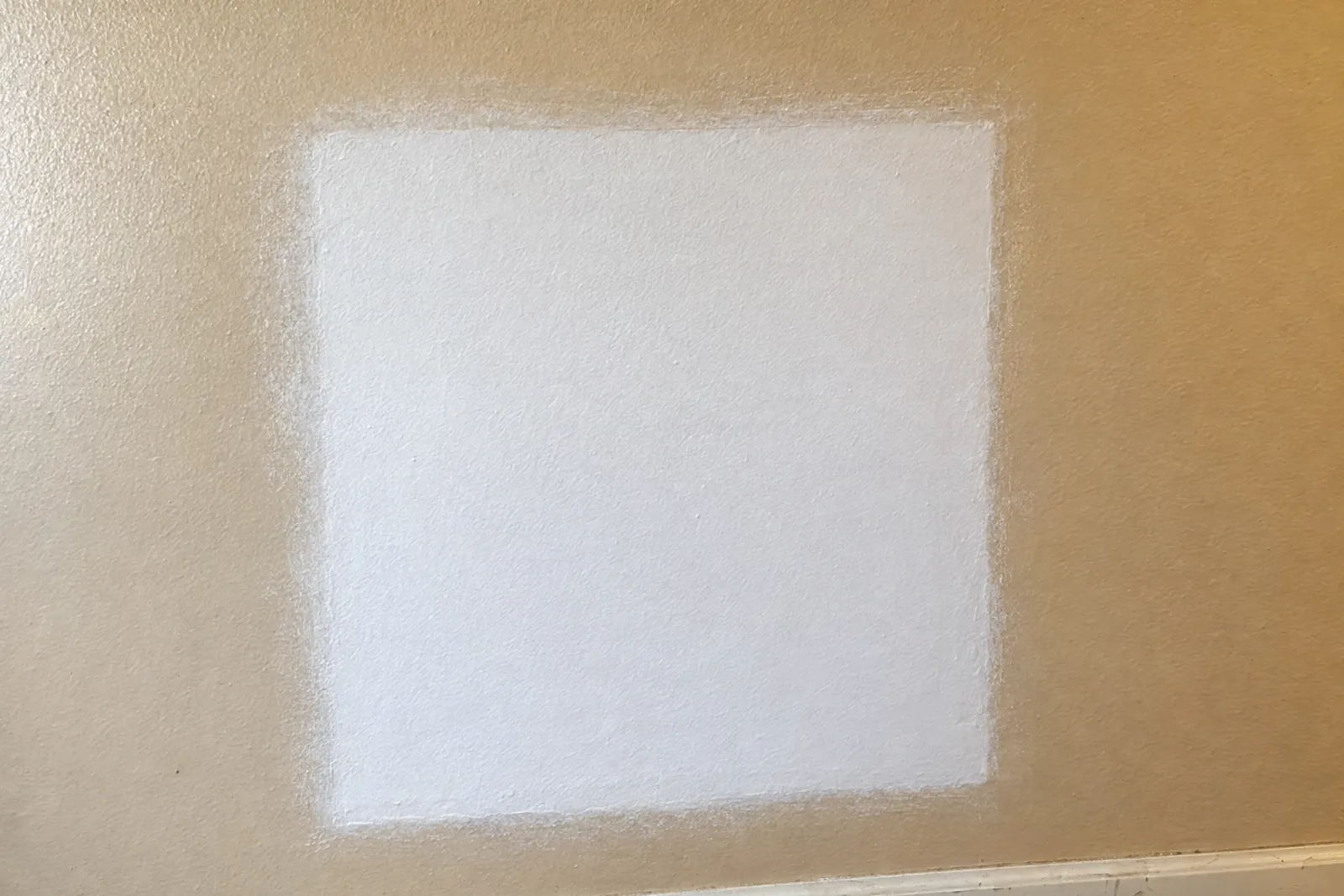
A store-bought patch kit holds well on a small hole in plain wall. On a textured wall, the flat square it leaves is usually what gives a home repair away.
Look past Pearsall along I-35
Pearsall sits near the center of Frio County with Interstate 35 bypassing it on the west side, and repairs on this site come from the towns along that corridor and a little beyond it.
- Dilley, 16 miles south off I-35
- Derby, between Pearsall and Dilley at FM 1583
- Moore, 13 miles northeast along I-35
- Devine, northeast in Medina County
- Charlotte, east in Atascosa County
- Big Wells, southwest in Dimmit County
Fuller notes on each sit on the page covering towns near Pearsall.
Close up openings other trades leave
Electricians, plumbers and air conditioning installers cut into drywall to reach what is behind it, and most of them leave the hole for someone else to close. Done properly, the hole gets solid backing behind it before the first knife of mud.
- Electrical work
- A moved outlet or a new switch leaves an old box hole or a slot along a wire run. Wood cleats are screwed behind the edges, a fitted gypsum piece is fastened to them, and the joints get tape.
- Plumbing access
- Openings made to get at a shutoff or a tub drain are either closed with fresh board or given a removable access panel, for valves that may need attention again.
- Air conditioning
- A relocated thermostat or a replaced return grille can leave a bare outline or a gap. The gap is filled out to the new size and the texture carried over the edge.
- Low-voltage runs
- Cable, alarm and speaker installs leave small, scattered holes along a wall or ceiling, and these are usually grouped into a single patching job.
Keep the piece the trade cut out if you can; it is the right thickness and already painted on one side. Book the patch once the other work is finished and anything that needs checking has been checked.
Settle the common worries first
- Is a painted patch going to stand out?
- One that is spread broad at the edges, textured to the wall and primed ahead of paint is much less likely to. Painting that wall corner to corner beats spot touch-up, because new paint dabbed onto old seldom matches its sheen.
- Can the texture on my walls be copied?
- Knockdown, orange peel, skip trowel and smooth walls can all be reproduced, by trowel or by hopper gun, and a trial on spare board usually comes first. The texture guide on this site shows how each one is built.
- Does a single small hole justify calling?
- Yes. One hole can be priced from a photo, and if a few other minor spots around the house need attention, mention them so the price covers them all.
- How many days should I set aside?
- Most small repairs take two or three coats with a dry-out between each, so they cover one or two days. A ceiling that soaked up water waits for the board and framing to dry, which can add several more.
- How far does the sanding dust travel?
- Sanded joint compound makes a powder light enough to drift through a house. Plastic over doorways, covered vents and a vacuum at the end hold it back; ask that those be part of what you are paying for.
- What does drywall repair usually cost?
- Fixr, a national cost guide, gives $200 to $550 as the range for most drywall repairs and $350 as the national average. Fixr's range covers the whole nation, so read it as background, not as what a Pearsall job costs; yours turns on size, height, texture and paint.
Handle the leak ahead of the wall
Drywall is the last thing to deal with after a leak. The order below keeps a small stain from turning into a ceiling that comes down, and it keeps the repair from being done twice.
- Kill power to the ceiling first. When a ceiling sags or drips, power comes first. At the panel, switch the overhead fixture or ceiling fan in that room to off, and after that nobody should stand beneath the wet patch, pets included.
- Cut off the water. Close the main valve for a plumbing leak, turn off the air conditioner if its pan is spilling over, or get a tarp or a roofer onto a leaking roof.
- Dry the space. Move furniture and rugs, run fans, and once the drain is clear let the air conditioner pull humidity out of the room. Soaked insulation lying on a ceiling keeps the board wet.
- Check before deciding. Meter readings taken on the board tell you when it has dried. Firm board that reads dry can be sealed and painted; board that stays soft, droops or smells musty gets removed and new gypsum put up.
- Then plan the repair. The ceiling leak repair page walks through how a water-damaged section is rebuilt.
Plan rental turnovers room by room
For a landlord or property manager, the drywall part of a turnover goes smoother when it is planned as one job instead of a string of separate calls.
- Batch the rooms
- Walk the unit once, mark every hole, crack and dent with painter's tape, and send photos of the lot. One price for the whole unit is simpler to schedule than room-by-room work.
- Sort out access
- Say who holds the key, whether a lockbox is in place and whether utilities are on. Compound and primer need power for lights and fans to dry properly.
- Work around tenants
- With a tenant still in residence, ask for one room at a time so beds and the kitchen stay usable, and give notice the way the lease spells out.
- Leave room for paint
- Book the painter after the last coat of primer has dried. A turnover that squeezes both into one day tends to show the patches.
Start with one photo of the damage
Say what hit the wall or ceiling, or what leaked onto it, and which room it is in. A texted picture gives the pro a sense of the scope before the call.
The call covers the damage first and finishes with a figure from a Frio County drywall pro, agreed before anything is scheduled.